
Artificial intelligence has permanently shifted the landscape of higher education admissions, but not entirely in the ways we anticipated. While universities utilize advanced software to optimize outreach, sophisticated bad actors are harnessing these exact same automated tools to launch large-scale enrollment fraud attacks. Today’s enrollment strategists and CIOs must recognize that traditional, manual review processes are no longer capable of keeping pace with machine-driven deception. Protecting institutional integrity and safeguarding public funding requires a paradigm shift—combating automated threats with smarter, faster, and more integrated digital defense mechanisms.

Criminal Networks and the Scale of Automated Fraud
Higher education admissions face unprecedented threats as sophisticated criminal networks exploit AI text generators and automated bot scripts to deploy massive, coordinated application attacks. These bad actors generate highly realistic synthetic identities and personal statements at a scale previously impossible. Consequently, institutions find themselves inundated with fake profiles that skew metrics and threaten resource allocation.
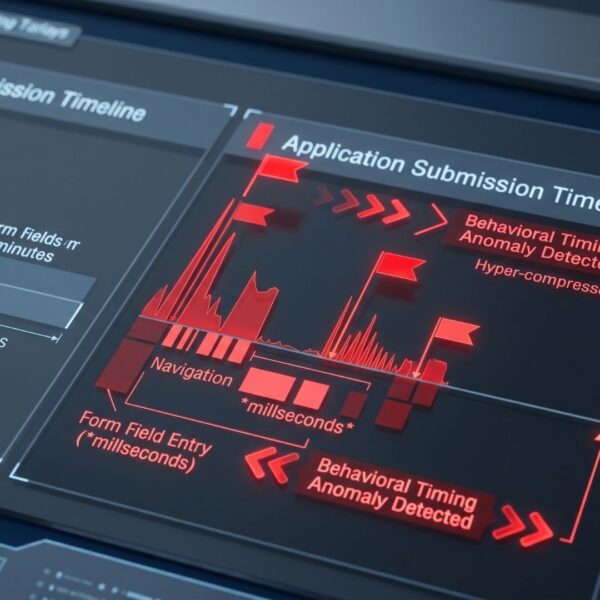
Proactive Defense Through Intelligent Data Verification
To counter these evolving digital threats, colleges must move beyond traditional post-enrollment screening methods. Embracing an automated data verification platform allows admissions offices to establish a proactive frontline defense. By analyzing submitted materials immediately upon receipt, we can easily identify anomalies, authenticate legitimate documents, and verify individual prospective identities long before decisions are finalized.

Real-Time Risk Scoring and Pattern Evaluation
Our modern defensive architecture relies heavily on predictive risk scoring, subtle email pattern evaluation, and exact behavioral timing tracking. Automated algorithms analyze how an application is filled out, detecting automated scripts that input data faster than any human possibly could. This dynamic evaluation flags suspicious behaviors instantly, effectively catching fraud attempts in real time.
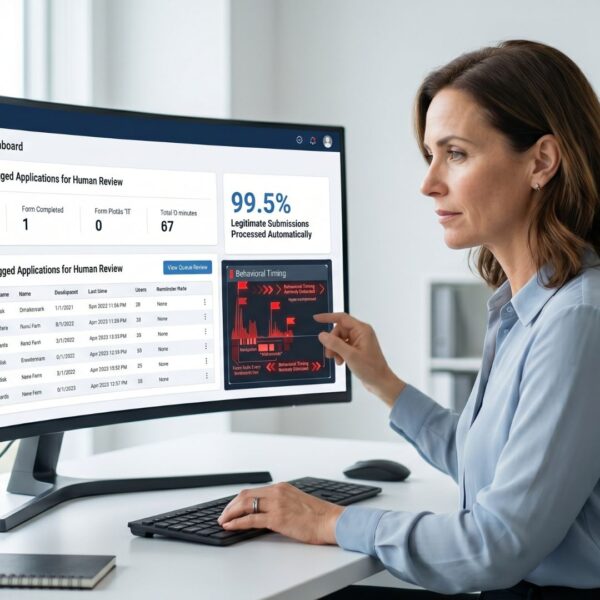
Optimizing Staff Impact Through Targeted Human Review
By implementing intelligent automation, institutions dramatically reduce the operational burden placed on internal enrollment teams. Instead of manually auditing thousands of benign admissions submissions, keeping human review focused only on high-risk flagged applications optimizes institutional productivity. This strategic triage ensures that security experts spend their valuable time investigating complex, highly sophisticated identity threats effectively.
Confronting the surge of AI-driven application fraud requires a unified, automated approach to enrollment security. By implementing predictive risk scoring, analyzing behavioral timing, and isolating high-risk files for manual review, colleges can secure their resources against ghost students. At AMSimpkins & Associates, we developed our S.A.F.E. platform to deliver these exact real-time verification capabilities seamlessly within your existing systems. To discover how your institution can adapt to these evolving threats, read our comprehensive guides on enrollment protection or schedule an educational assessment with our technology experts today.
About Us
AMSA Connect is a cloud-based solution that specializes in securely providing data integration , migration and conversion services. for Higher Ed.