
dive deeper into campus data by using aMSA connect and S.A.F.E.
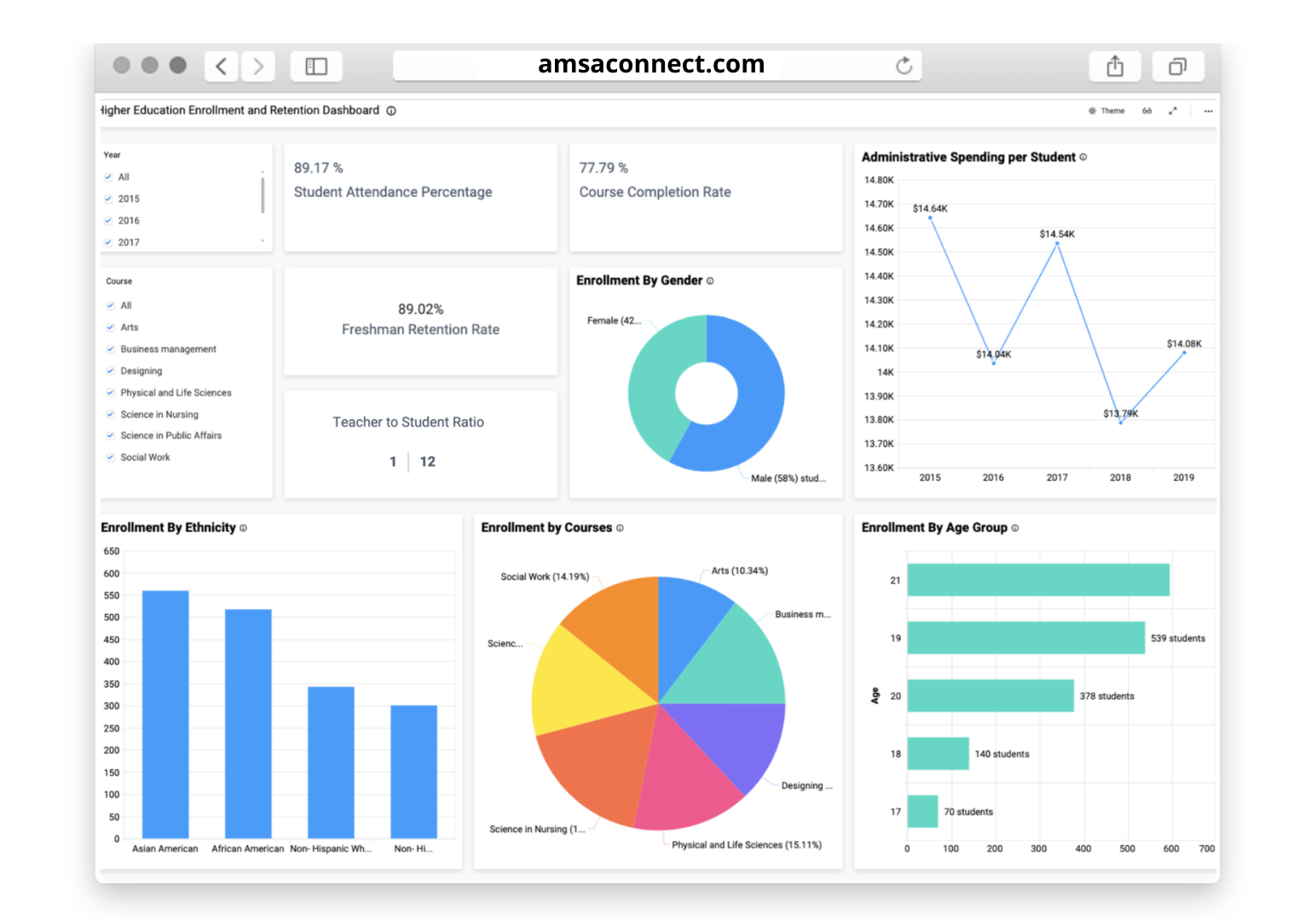
Real-Time Data Benefits
How fast are you accessing your data
Most institutions are forced to work with unreliable and outdated data, but many also lack tools to quickly integrate data from different sources into a unified view. Traditional batch data integration is hardly up to this challenge.
That’s why a growing number of companies are looking for more effective and faster types of data integration. One solution is realtime data integration, a technology superior to batch methods because it enables rapid decision-making, breaks down data silos, future-proofs your business, and offers many other benefits.
Real-time data integration involves processing and transferring data as soon as it’s collected. The process isn’t literally instantaneous, though. It takes a fraction of a second to transfer, transform, and analyze data using APIs and other technologies.
Break Down Data Silos Between Departments
When deciding which types of data integration to use, data silos are another obstacle companies have to account for. When data sets are scattered across ERP, CRM, and other systems, they’re isolated from each other. Engineers then find it hard to connect the dots, uncover insights, and make better decisions. Fortunately, real-time data integration helps businesses break down data silos.
From relational databases and data warehouses, real-time data integration delivers data with sub-second latency from various data sources to a new environment. Organizations then have better visibility into their data, we call this Integration Relationship Management (IRM). Admissions, for example, can integrate their student data with other departments and ensure that student data reporting is shared with all stakeholders instead of being siloed.
Real-time Data Flows Allowrapid Informed Decisionmaking
Within each institution, each department produces large amounts of different types of data. Real-time integration allows organizations to act quickly on this information.
Data from on-premise and cloud-based sources can easily be fed, in real-time, into cloud-based infrastructure, for instance, Ellucian Colleague, Ellucian Banner, Workday, Oracle and many more, providing timely insights and allowing fast decision making.
Speed is becoming a critical resource. Detecting and correcting data errors such as duplicate data or incorrect addresses, emails, phone numbers, and social media append requires detailed matching data points with a set of predefined parameters in real time. In many cases, if these processes are done manually, data processing can take 5 hours a week. But real-time data integration allows organizations to collect and analyze data within seconds.
Improve Opportunities for Growth
Your institution’s Admissions, Enrollment, Recruiting and Marketing departments can better serve constituents by having data from multiple data sources readily available. With real-time access to student financial aid, application status, registration status, or account balances will empower constituents with an up-to-the-minute understanding of their problems. Rapid data flows also allow organizations to be creative with customer engagement. They can customize and program their data integration to inform a CRM system to immediately engage constituents who live within a certain geographic area, make large donations, go to specific high schools, and etc.
Better constituent experiences then translate into increased enrollment, fundraising and loyal endowments. Almost 75% of consumers say a good experience is critical for organizational loyalty, while most organizations consider customer experience as a competitive differentiator vital for their survival and growth.
Optimizing Departmental Productivity
Spotting inefficiencies and taking corrective actions is another important goal for Higher Ed institutions.
Companies need access to real-time data and continuously updated dashboards. Relying on periodically refreshed data can slow down progress. Instead of tackling problems in real time, managers take a lot of time to spot problems, causing unnecessary costs and increased waste.
Therefore, the key to optimizing departmental productivity is collecting, cleansing, transferring, and analyzing data in real time. And many organizations agree with this argument. According to an IBM study, businesses expect that fast data will allow them to “make better informed decisions using insights from analytics (44%), improved data quality and consistency (39%), increased revenue (39%), and reduced operational costs (39%).
| Admissions | New Applicants/ Enrollment |
|---|---|
| Advancement | Gift Entry, Donor Profile Creation |
| Student/ LMS | Courses, Sections, Users, Terms, Grades, Study Abroad |
| Finance | (A/P) E-Procurement, (A/R)- Student Payments, Parking/Bookstore fines |
| I.T Department | Data Cleansing, Data Dictionary, API development/ extension |